What are the resonances from redlining to political gerrymandering? How are neighborhoods designated to separate people? When did the Federal Government actually engage in unfair lending practices in order to keep African Americans out of quality neighborhoods and away from the best resources available to other Americans?
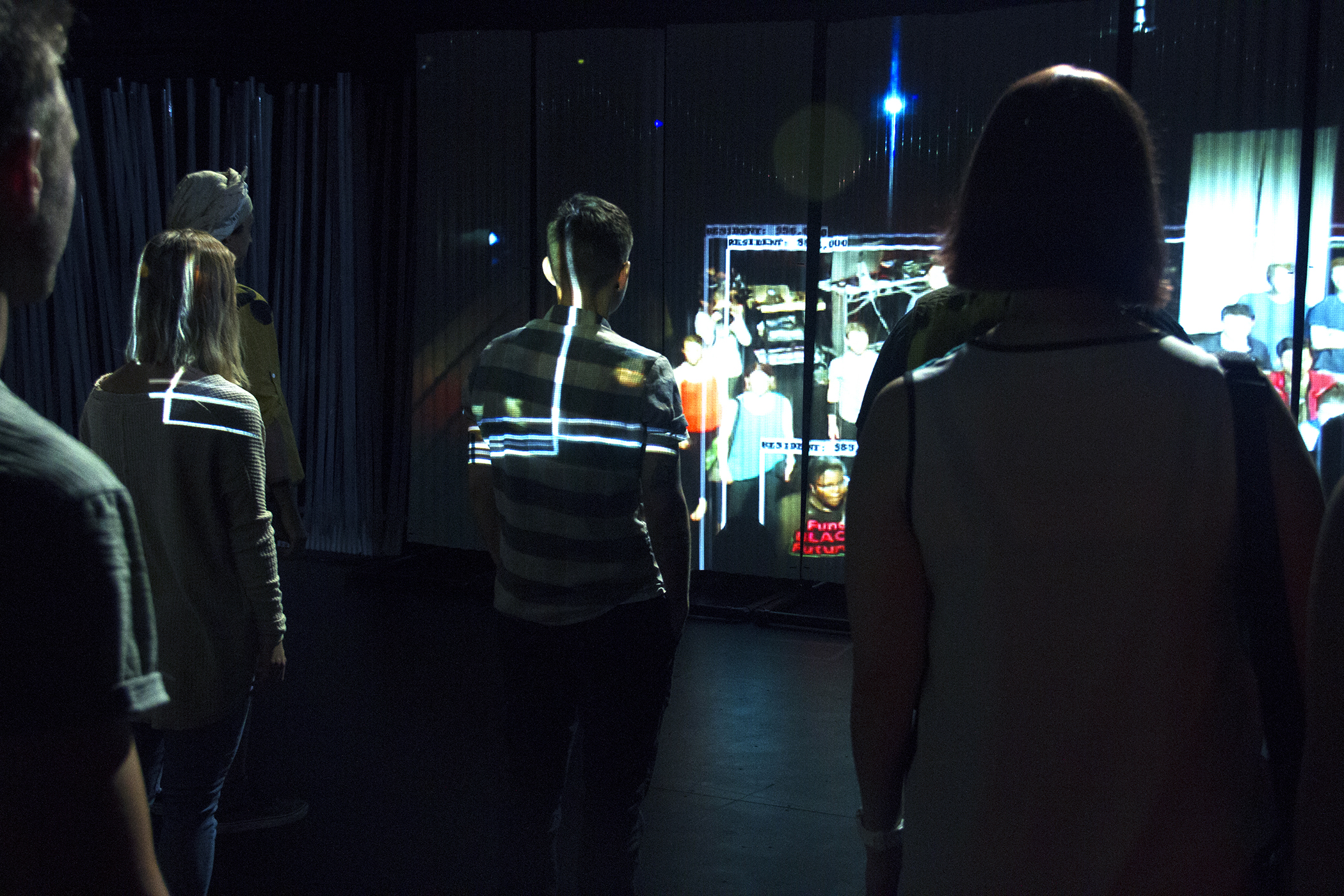
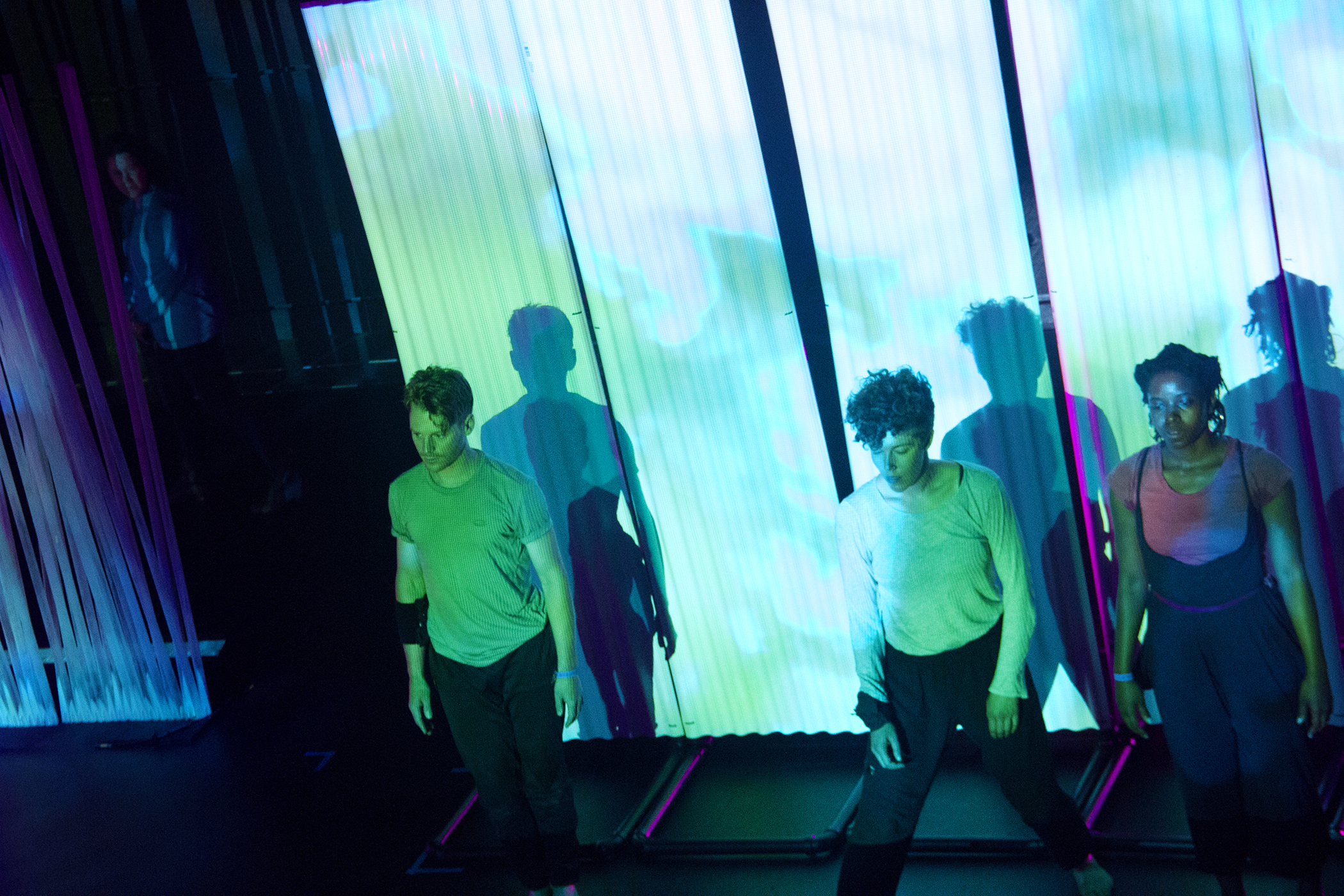
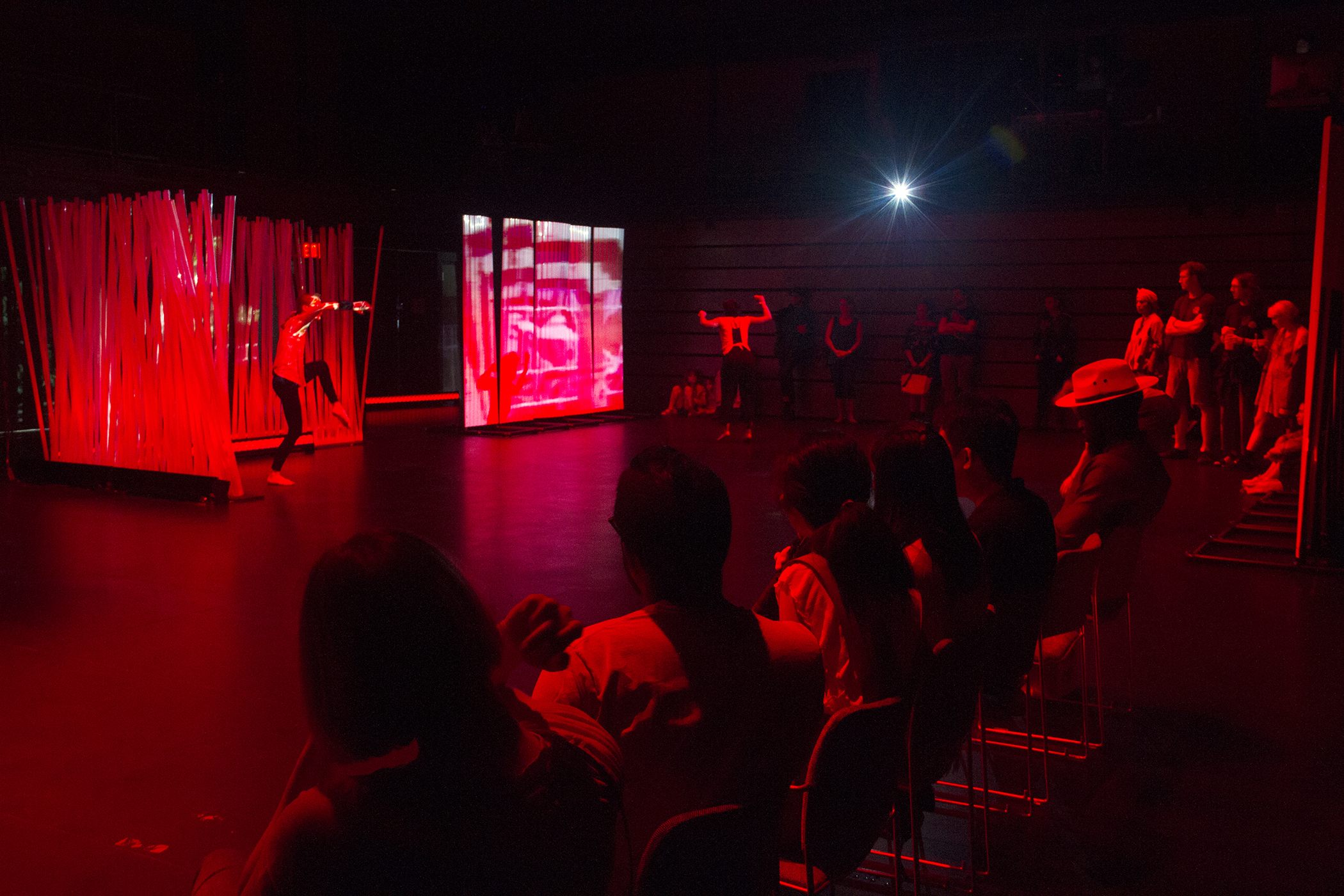
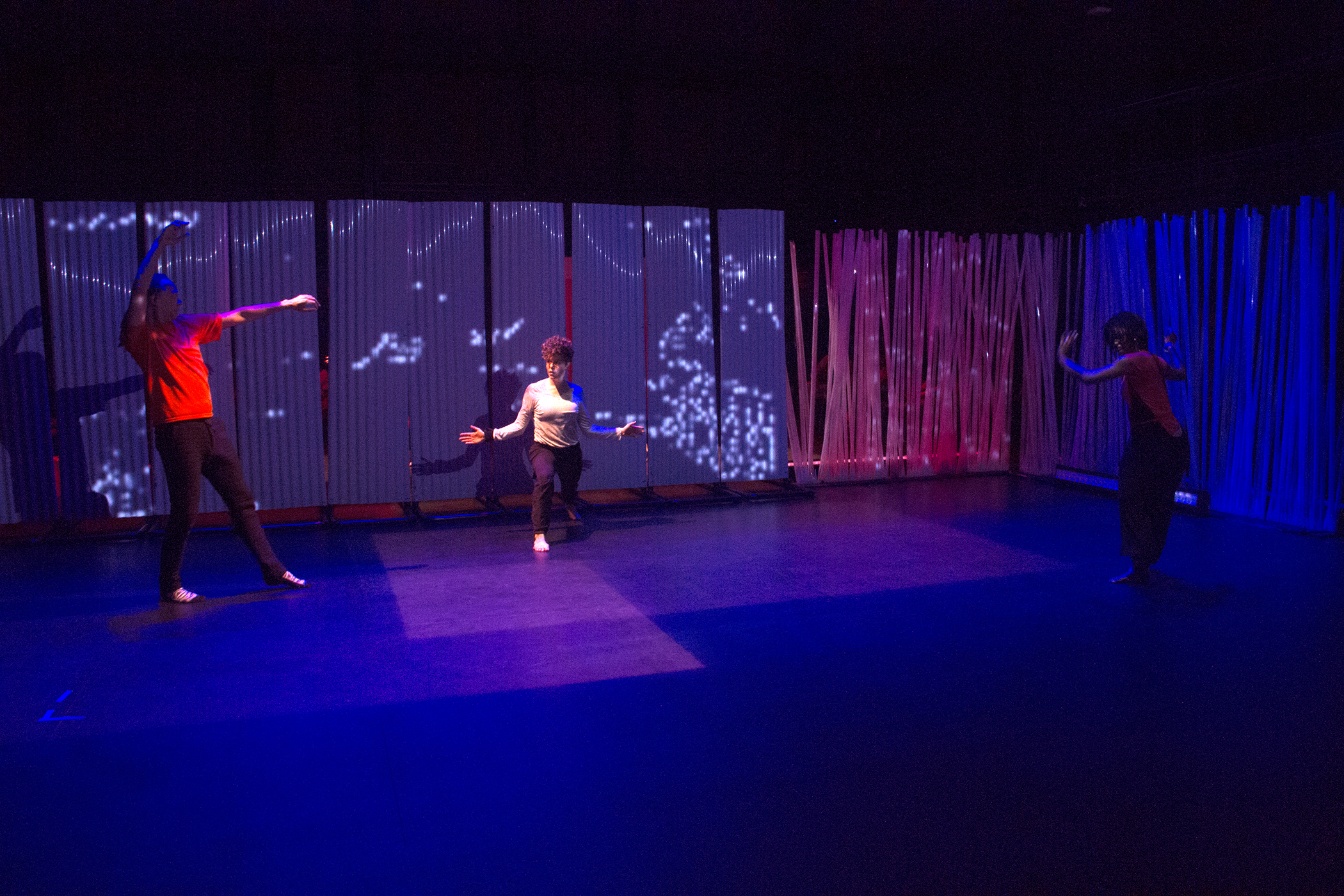
SLIPPAGE presents an exploration of redlining, gerrymandering, and asocial cartographies that produce and reinforce inequality. Deploying custom-designed live-feed sonification interfaces, wearable technologies, and AfroFuturist performance practices, this hour-long afrotechnopunk extravaganza brought together Duke University faculty, graduate students, community activists, and SLIPPAGE artists for a special Moogfest presentation.
Overview
These Borders That Keep Me Down is a collaborative performance piece developed with Duke University's Slippage Lab and presented at Moogfest, the annual music, art, and technology festival in Durham, North Carolina. The piece sits at the intersection of critical geography, sound art, and performance, using technology as a vehicle to interrogate the spatial mechanisms of racial inequality in the United States.
The performance draws on the history of redlining — the practice by which the Home Owners' Loan Corporation and the Federal Housing Administration systematically denied mortgage lending and insurance to neighborhoods with significant Black populations — and connects it to the ongoing practice of political gerrymandering, in which electoral district boundaries are drawn to dilute the voting power of communities of color. Both practices are cartographic acts: the drawing of lines on maps that determine who has access to resources, representation, and opportunity.
Technical Design
The technical infrastructure of the performance centered on custom-built sonification interfaces that processed live data feeds in real time. Geographic and demographic data — including historical redlining maps, contemporary gerrymandering district boundaries, and socioeconomic indicators — were streamed through SuperCollider synthesis engines, translating spatial inequality into audible form. As performers moved through the space, wearable sensor technologies captured their gestures and positions, modulating the sonified data streams in response to their bodies.
The result was a feedback loop between performer and data: the performers' movements shaped the sound of inequality, while the sound shaped the performers' choreography, creating an embodied experience of the abstract forces that organize urban space along racial lines.