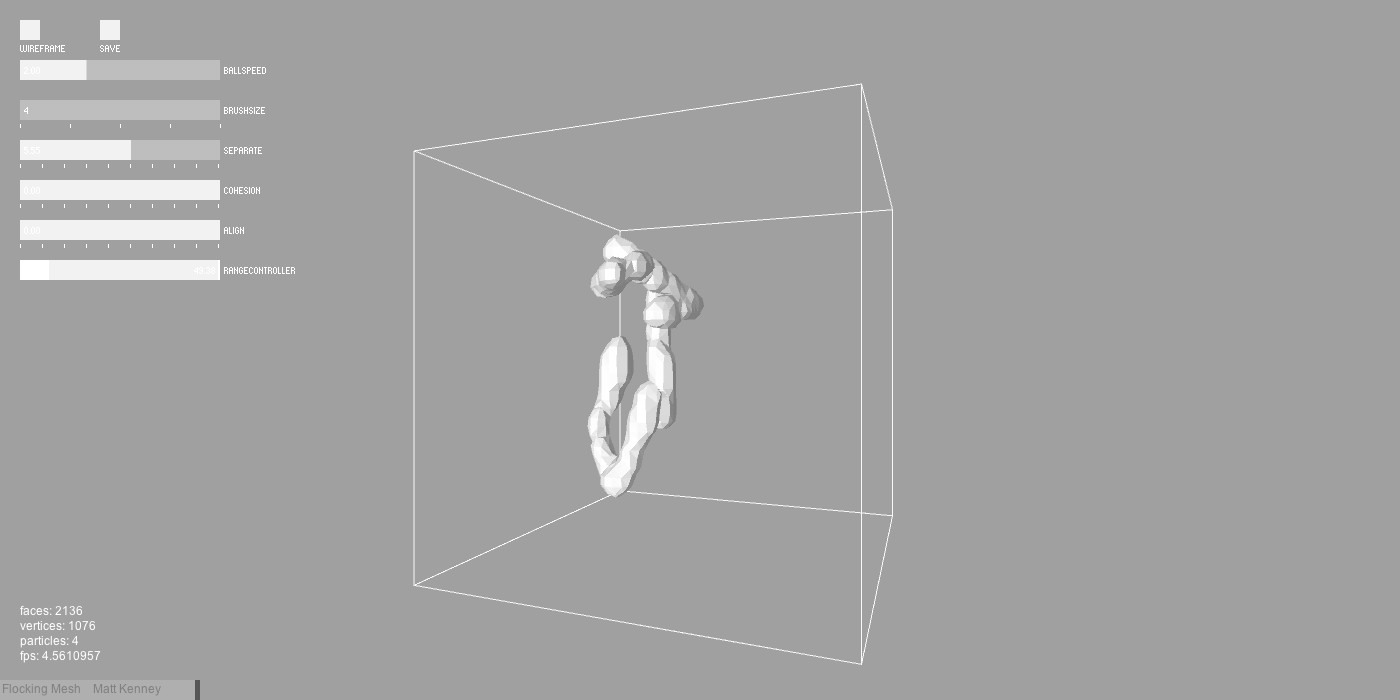
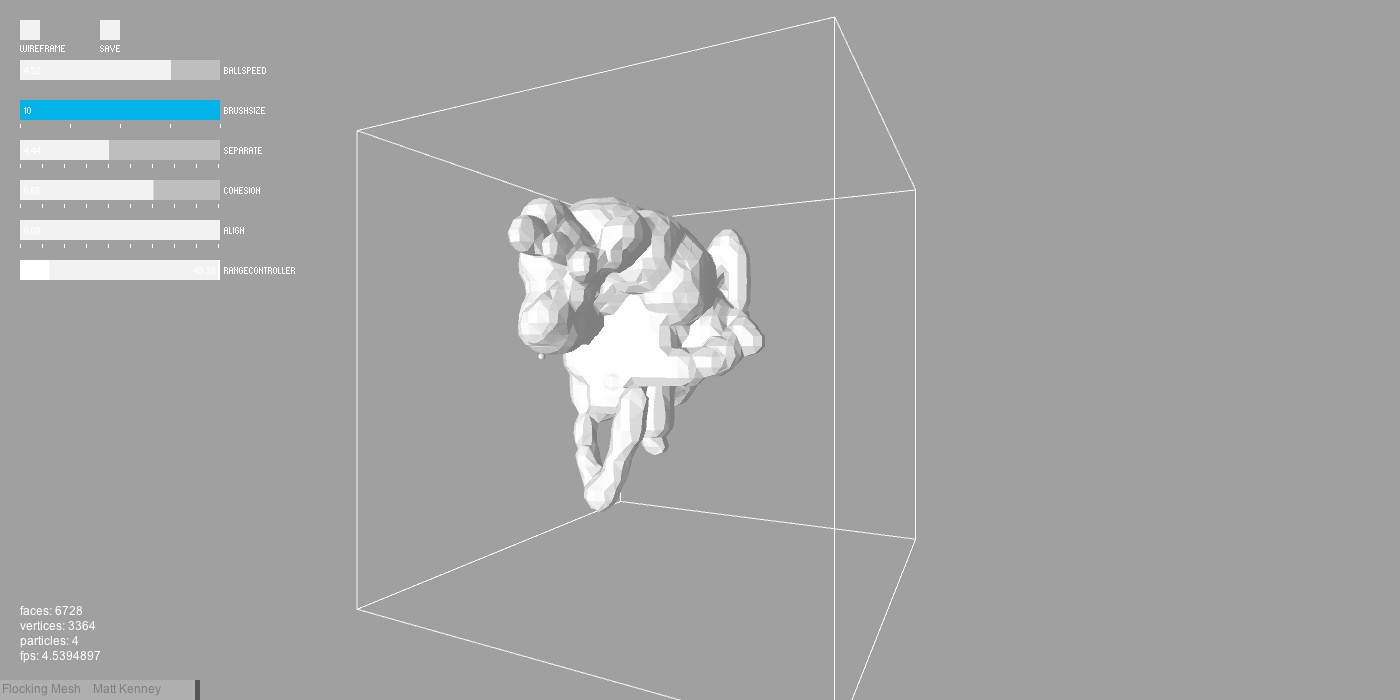
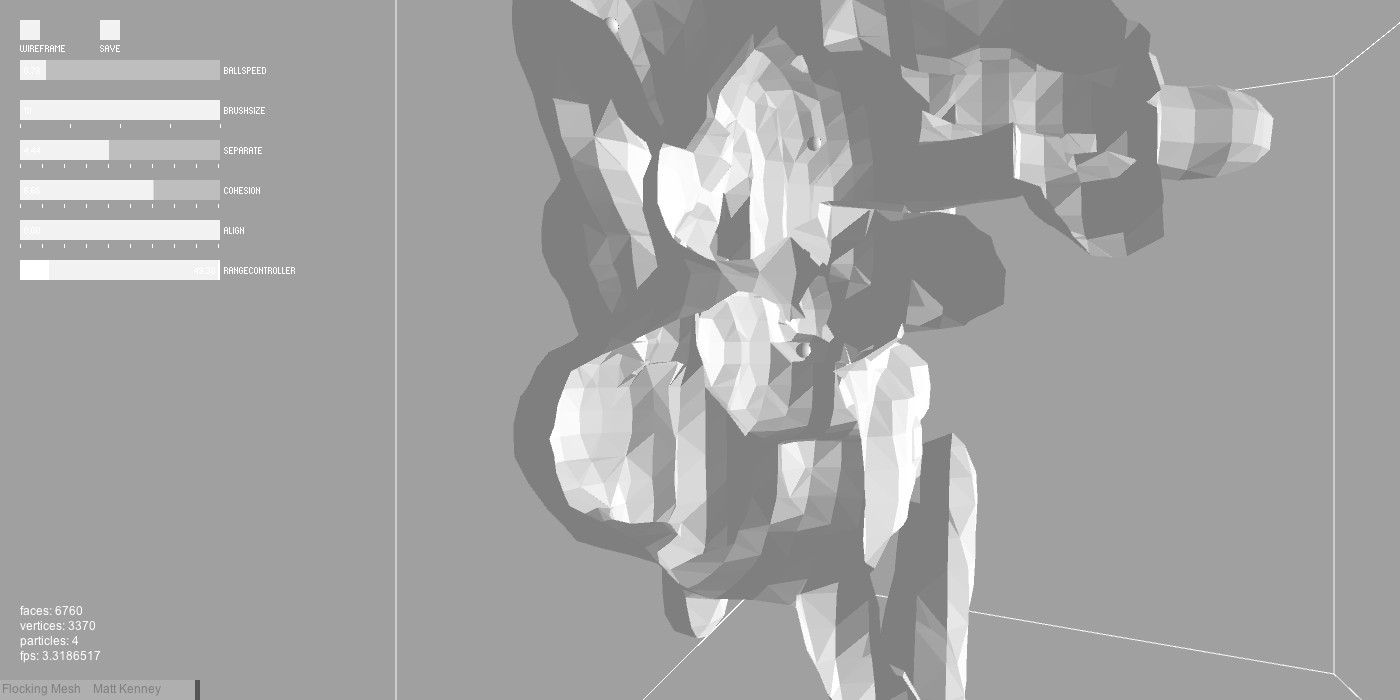
Experimental CAD systems were created by attaching virtual nodes with chords and giving each node an attraction and repulsion variable from the surrounding nodes, creating oscillating, ever-changing structures based on algorithm and chance. A mesh shell encases the structure, giving it form. Variables determining the attraction and repulsion of each node, the number of nodes, and the surface area of the mesh can be changed in real time.
Overview
Algorithmic Techtonics is a series of experiments in generative form-making that treats architectural and sculptural design as an emergent process rather than a deliberate act of composition. The work explores what happens when the designer relinquishes direct control over geometry and instead defines a set of behavioral rules — attraction, repulsion, connectivity — that particles follow as they self-organize into complex three-dimensional structures.
Process
The system places a configurable number of virtual nodes in three-dimensional space and connects them with elastic chords. Each node is assigned two key parameters: an attraction variable that pulls it toward neighboring nodes and a repulsion variable that pushes it away. These opposing forces create a dynamic equilibrium where the particle network continuously oscillates, stretches, and reconfigures itself.
As the nodes interact, the system generates a mesh surface that wraps around the evolving structure in real time, translating the abstract particle dynamics into a tangible form. The designer can intervene at any moment — adjusting the number of particles, tuning the strength of attraction and repulsion, or modifying the mesh resolution — but the specific geometry that results is a product of the algorithm and the accumulated effects of chance.
The resulting forms often resemble organic structures: branching networks, cellular membranes, geological formations. They are recognizable as architecture-adjacent but clearly not the product of conventional design intent. Each run of the system produces a unique form that could not have been predicted from the input parameters alone.